Showing posts with label Designer - Doll Clothes of Yore. Show all posts

Sunday, September 23, 2012

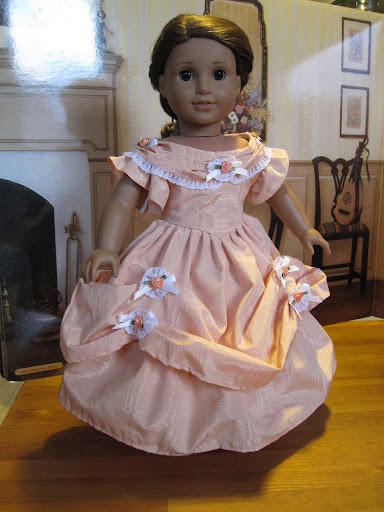
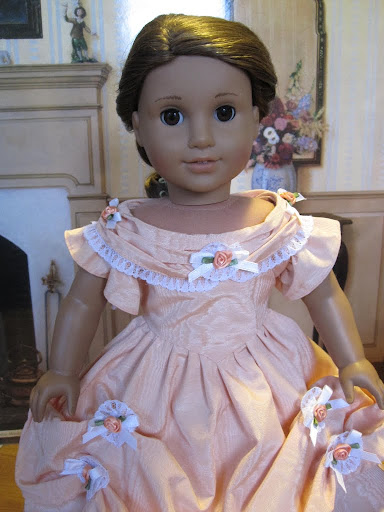
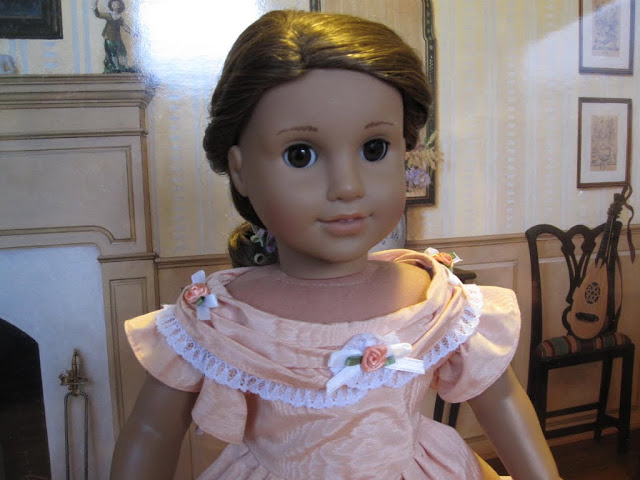
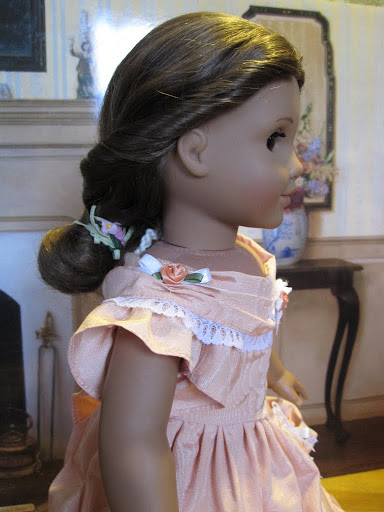
Lucy Washbourne's Dress

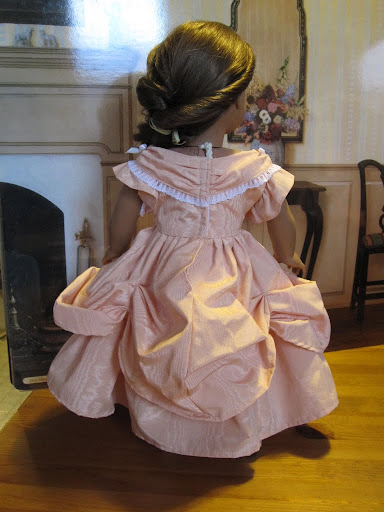
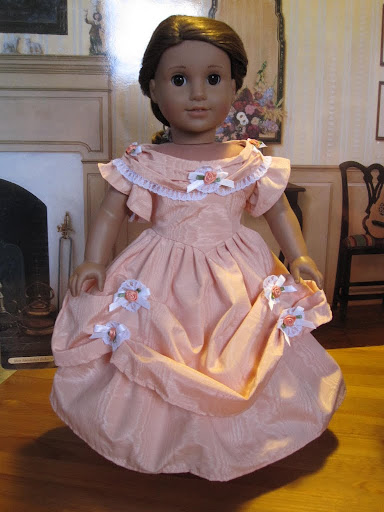
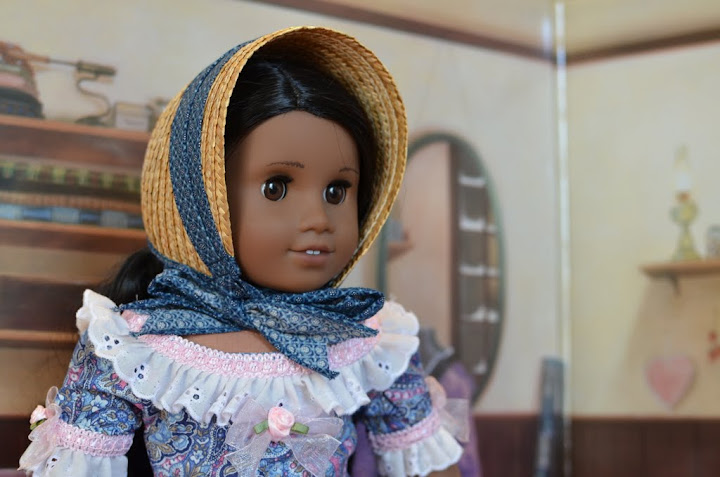
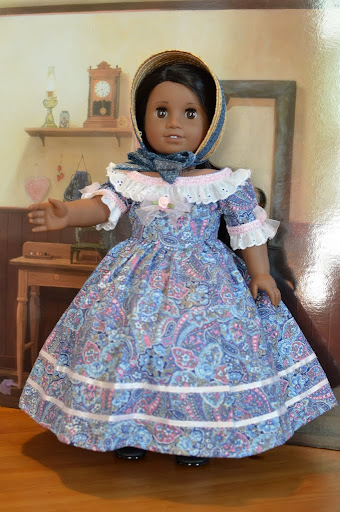
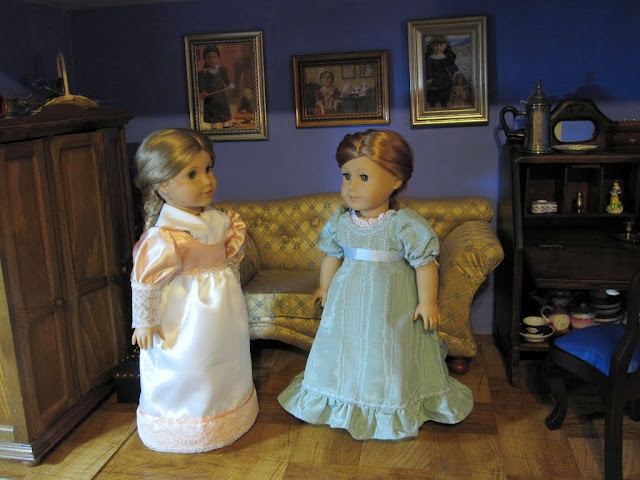
I always imagine Lucy Washbourne from the children's novel Rifles for Watie, might wear a dress like this made by Doll Clothes of Yore to the local ball.  Lucy was a Cherokee character, whose family living in Indian Territory fought on the side of the Confederacy. Her love interest is Jess Bussey, who is a Union spy...

Tuesday, May 24, 2011

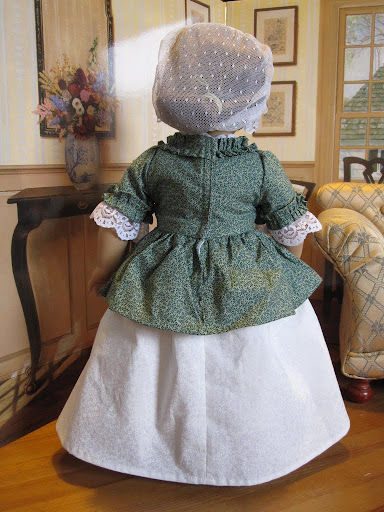
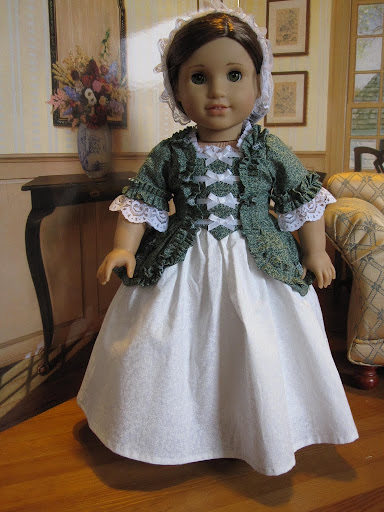
Green Robe a l'Anglaise by Doll Clothes of Yore

The Elizabeth's Best Outfit is on sale at Doll Clothes of Yore. The cotton fabric is similar to the copy I have at home:


You can see more colonial outfits in my Picasa Album.

Saturday, February 19, 2011

Young Victoria Evening Gown

This taffeta French Evening Gown was made by Doll Clothes of Yore. Apparently, she only has two copies left. The gown is modeled after early portraits of Queen Victoria and Empress Eugenie, though it would be appropriate for a doll time traveling between 1840-1860.

Young Victoria

Empress Eugenie Surrounded by Ladies in Waiting


Have you seen Emily Blunt in Young Victoria? I saw it in the theaters and I do re-watch it every few months on Netflex streaming. The movie was about Victoria's early power struggles and her maturing into a queen and wife, but there were some surprisingly charming and funny moments. I heard the actress Emily Blunt fought tooth and nail to win the leading role, thinking the movie would turn her into a Cate Blanchett. But secretly, I think she wanted the role in order to 1) wear gorgeous gowns 2) pet Cavalier King Charles Spaniels all day 3) and smooch the actor playing Prince Albert.

I have read the Christopher Hitchens' biography called, Queen Victoria Personal History. It's quite good except he somehow doesn't include much information about the potato famine in Ireland. I don't want to romanticize her reign, because the British empire expanded the most under her rule and even in modern times, we're still experiencing many of the nasty effects of colonialism. But from the biography, you get a sense of how deeply she loved her husband and children. In Victoria's early reign, she was considered a fashion trend-setter. However, after Prince Albert died in 1861, she donned on black for the rest of her life.

Anyway, here are some of my favorite gowns from the movie.
Emily Blunt as Young Victoria

Sigh. I want to get married in this blue dress. I don't care if I look dowdy for the 21st century. I will be at the peak of fashion for 1840!


Tuesday, February 15, 2011

Pink Polonaise or Milkmaid Gown

In the 1770s and 1780s, Enlightenment thinkers waxed philosophical about the virtues of Nature and rustic living. Even Marie Antoinette, yearning for the simpler life, had her own farm where she pranced around in country garb.

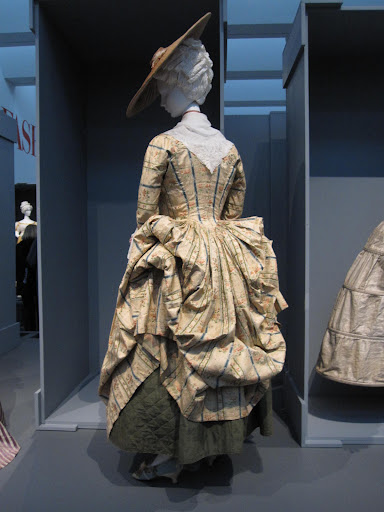
Undoubtedly, these new ideals popularized the polonaise style gown, which imitated milkmaids who tucked their skirts up to keep them from dragging in the mud while they did chores. Also known as robe à la Polonaise, the style consisted of a fitted bodice and a three tiered overskirt, draped over a petticoat. The overskirt got its full poufed look usually by ribbon ties or a ring and loop system.

Here's blogger writing about how ladies transitioned from gowns shaped by panniers to the polonaise style.

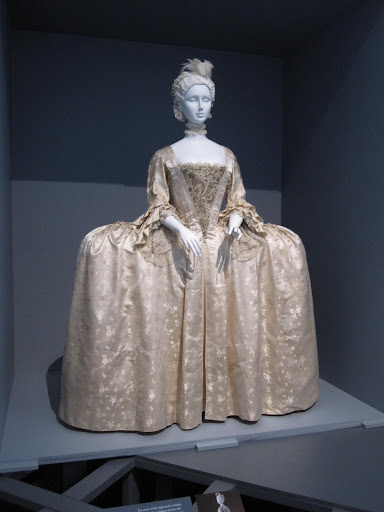
Contrast the old wide hoop style to the new polonaise (my two photos from the LACMA exhibit):


This must be the widest gown on record...or someone got stuck in the back of the sofa.


Here are real examples from the Met.


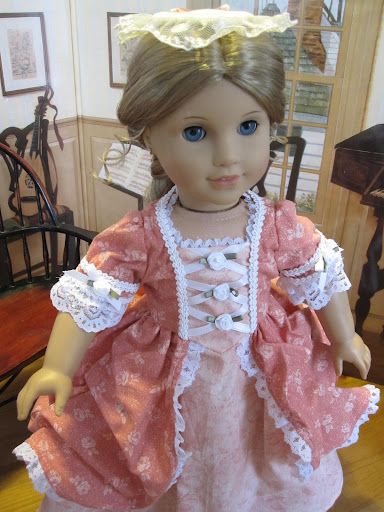
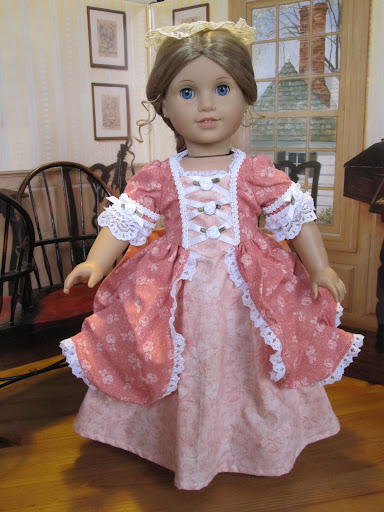
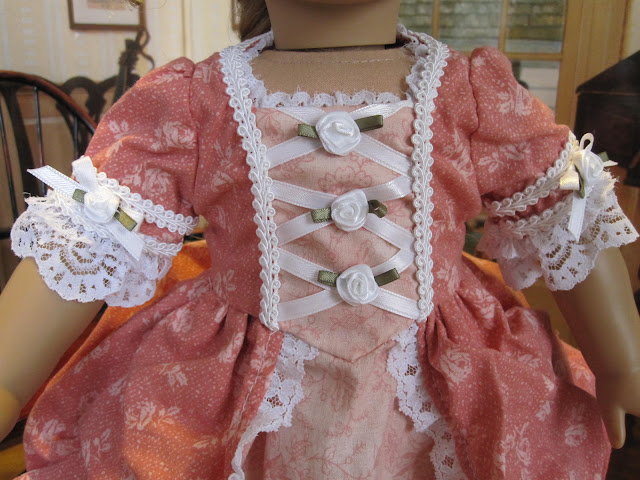
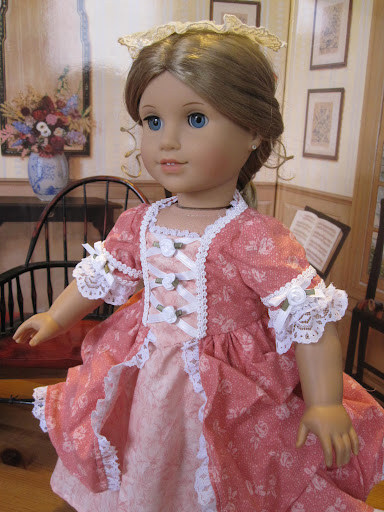
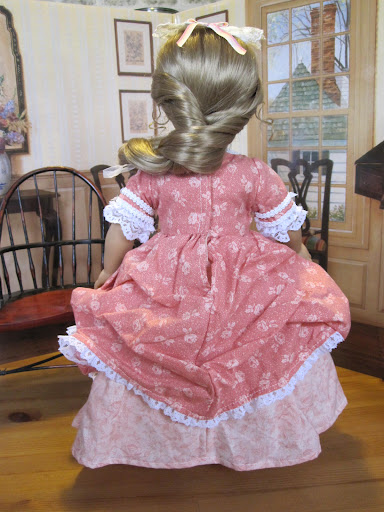
Here's my Elizabeth modeling a polonaise gown from Doll Clothes of Yore.


Monday, February 7, 2011

Little Dorrit and the Grand Tour

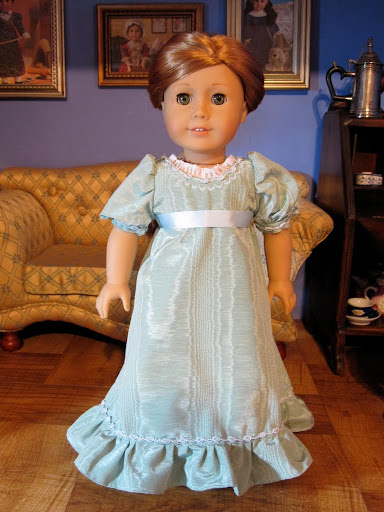
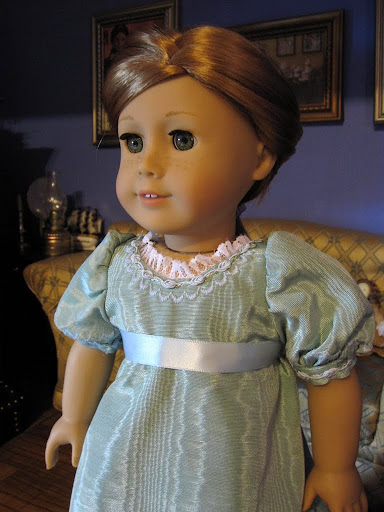
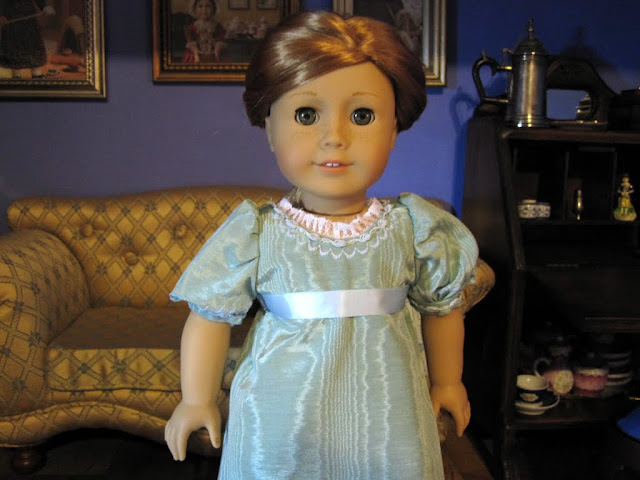
The following gown was created by Doll Clothes of Yore.


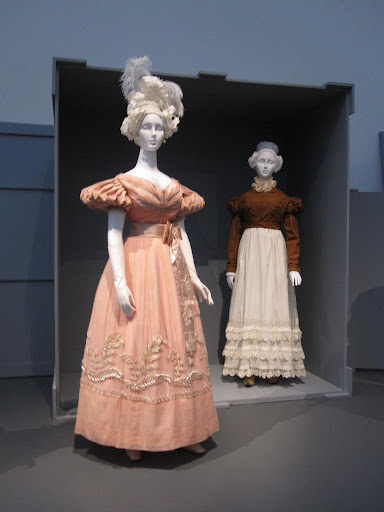
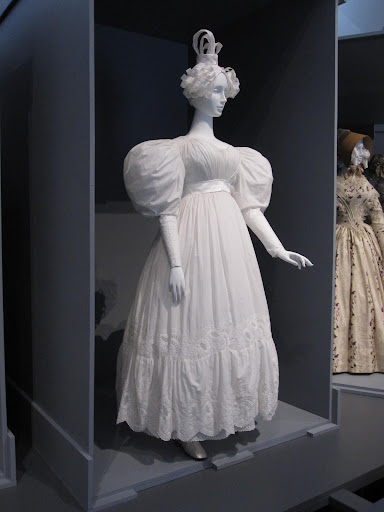
The costume designer in the 2009 BBC version of Little Dorrit used beautiful costumes from the 1820s and 1830s period. During this period, the fashion was moving away from the plain, straight ancient Roman-inspired gowns, to Romantic "historicism" which had slashed sleeves and many embellishments, reminiscent of the medieval period. By the 1830s, the very fashionable gowns had puffy sleeves and bell shape skirts.

Here's a timeline of gown silhouettes, so you get a better idea of what I'm talking about.
http://www.cwrl.utexas.edu/~ulrich/presentations/vicfashions/timeline.htm


These styles seem earlier than the ones above--probably 1820s.


Real examples from the 1820s:


Definitely 1830 gown...