A blog about American Girl, history, and miniature furniture, food, and fashion.
Showing posts with label 1840s - Pioneer. Show all posts
Saturday, October 1, 2011
Sunday, February 27, 2011
Tomi Jane's Purple Pioneer Outfit
I believe Tomi Jane drafted the yoke pattern herself. Here's the original listing:
Here is a three piece outfit with a pioneer look. The dress is made from a purple reproduction print, along with a bodice inset of plaid. The dress has very typical mid 1800s styling, with a round yoke, gathered bodice, dropped sleeves, and skirt with two growth tucks. The sleeves are trimmed with cluny lace. The separate apron in ivory, is hand embroidered with a feather stitch, and fully lined. The dress and apron both fasten in the back with small buttons and hand-worked button loops. To complete the look, I have made a self-fringed shawl from a very soft wool. The wool drapes (falls in natural looking folds) very well.
I forgot to photograph the shawl. It's very pretty.


These outfits are not mine, but I love admiring them. Tomi Jane also is such a good photographer! :)

Here is a three piece outfit with a pioneer look. The dress is made from a purple reproduction print, along with a bodice inset of plaid. The dress has very typical mid 1800s styling, with a round yoke, gathered bodice, dropped sleeves, and skirt with two growth tucks. The sleeves are trimmed with cluny lace. The separate apron in ivory, is hand embroidered with a feather stitch, and fully lined. The dress and apron both fasten in the back with small buttons and hand-worked button loops. To complete the look, I have made a self-fringed shawl from a very soft wool. The wool drapes (falls in natural looking folds) very well.
I forgot to photograph the shawl. It's very pretty.
These outfits are not mine, but I love admiring them. Tomi Jane also is such a good photographer! :)
Sunday, July 18, 2010
Pioneer Dresses by Terristouch
I thought I should separate this post from my reflection on buffalo.


(Molly is modeling a blue dress on the left by Terristouch.)
Friday, July 16, 2010
Where the Buffalo Roamed
Kirsten stories were set in Minnesota in the 1840s, and her encounters with Native Americans were always positive and gentle. She even makes friends with a little girl from a local tribe.
I did take a Native American History class in college. There were primary sources we read where white settlers had ambivalent and even positive opinions of indigenous populations. But I just never was able to get into the history of Western expansion. It was just so disturbing, reading about all the violent and tragic confrontations between settlers, the American army, and Native American tribes. But I was struck by the idea that what finally broke tribes like the Sioux, was the federal government encouraging army commanders, railway companies, sportsmen, etc to hunt the buffalo to near extinction. The nomadic Plain Indians followed the buffalo herds and used every piece of the animals to survive. On the other hand, many white Americans hunted the buffalo just for their pelts or for sport, and often left the rest of the carcass to rot, wasting the resource. Army commanders purposely, hoping to drive the Sioux and other tribes off valuable land and deprive them of their key resource, killed thousands upon thousands of buffalo. In just three years, in the early 1870s, 9 million buffalo were killed. The drastic thinning of buffalo herds from millions to a few thousand eventually forced Native Americans into the reservation system, which often led to lost identity and a host of other problematic social issues (e.g. alcoholism, depression).
Monday, June 29, 2009
Kirsten Out Fishing
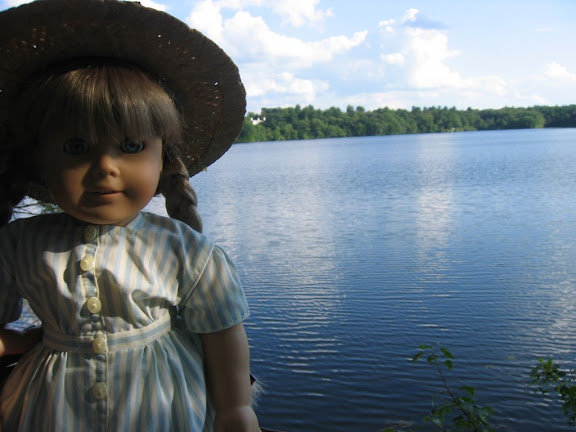
Kirsten enjoys the scenery near Lake Waban in Wellesley, MA.


(I took these photos last summer, and have since sold the fishing set. I just heard that the outfit doesn't come with the hat anymore. That's just ridiculous.)


(I took these photos last summer, and have since sold the fishing set. I just heard that the outfit doesn't come with the hat anymore. That's just ridiculous.)
Subscribe to:
Posts (Atom)